
Your Essential Guide to 13 Powerful Vitamins and Their Food Sources
In the quest for optimal health, vitamins are non-negotiable allies. These essential micronutrients power every process in our bodies, from converting food into energy to protecting our cells from damage. While supplements have their place, the most effective and balanced way to get your vitamins is through a colorful and varied diet.
This guide breaks down 13 essential vitamins, their unique roles, and the delicious whole foods where you can find them.
The Fat-Soluble Vitamins (A, D, E, K)
These vitamins are stored in the body’s fatty tissues and liver and are best absorbed when consumed with fat.
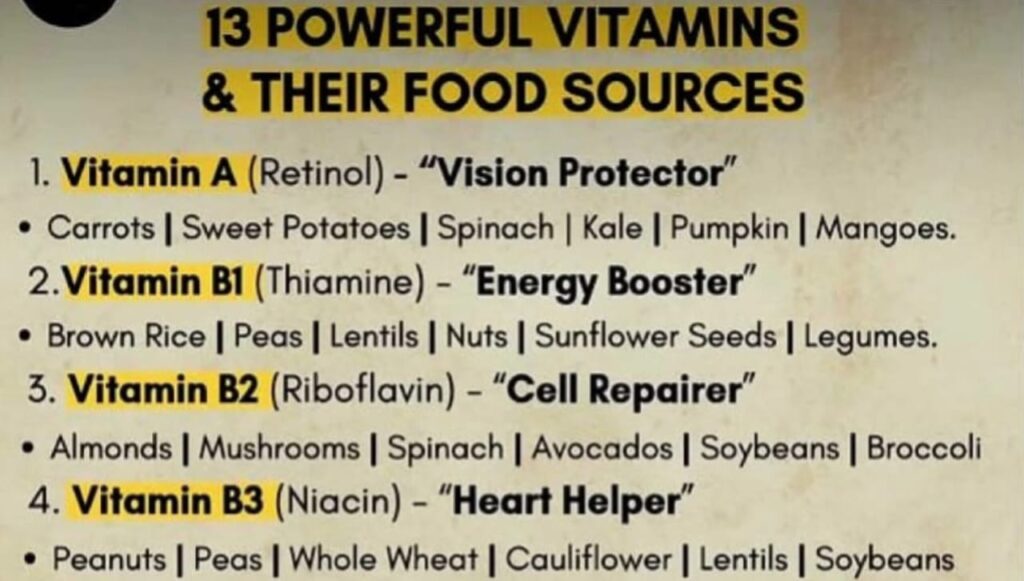
- Vitamin A (Retinol) – The “Vision Protector”
· Role: Crucial for healthy vision, immune function, and skin integrity.
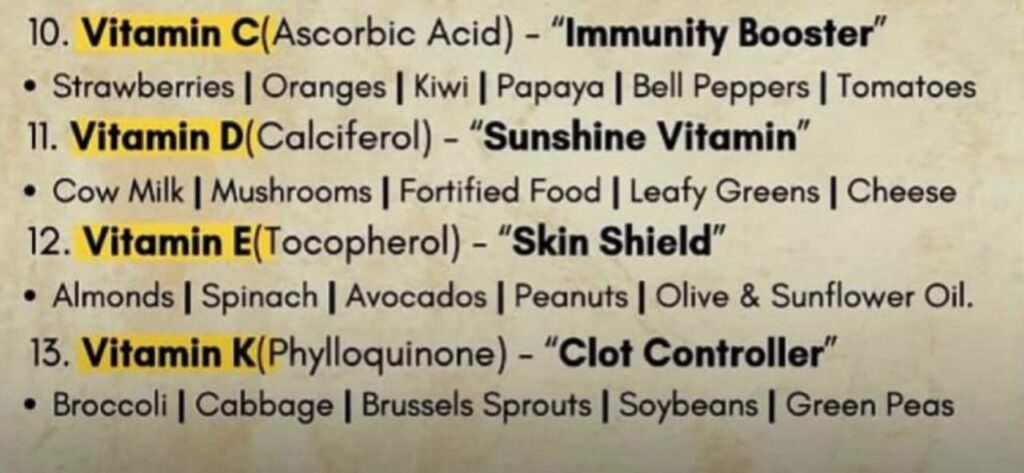
· Food Sources: Carrots, sweet potatoes, spinach, kale, pumpkin, and mangoes. - Vitamin D (Calciferol) – The “Sunshine Vitamin”
· Role: Vital for calcium absorption (strong bones), immune health, and mood regulation. Your skin produces it from sunlight.
· Food Sources: Cow’s milk, mushrooms exposed to UV light, fortified foods, cheese, and leafy greens. - Vitamin E (Tocopherol) – The “Skin Shield”
· Role: A powerful antioxidant that protects skin cells from damage and supports a healthy immune system.
· Food Sources: Almonds, spinach, avocados, peanuts, and oils like olive and sunflower. - Vitamin K (Phylloquinone) – The “Clot Controller”
· Role: Essential for blood clotting and building strong bones.
· Food Sources: Broccoli, cabbage, Brussels sprouts, soybeans, and green peas.
The Energy and Brain-Boosting B-Vitamins
This family of water-soluble vitamins is fundamental for converting food into energy and maintaining brain and nervous system health.
- Vitamin B1 (Thiamine) – The “Energy Booster”
· Role: Helps the body convert carbohydrates into energy.
· Food Sources: Brown rice, peas, lentils, nuts, and sunflower seeds. - Vitamin B2 (Riboflavin) – The “Cell Repairer”
· Role: Key for cell growth, function, and energy production.
· Food Sources: Almonds, mushrooms, spinach, avocados, and soybeans. - Vitamin B3 (Niacin) – The “Heart Helper”
· Role: Supports cardiovascular health and aids in enzyme function.
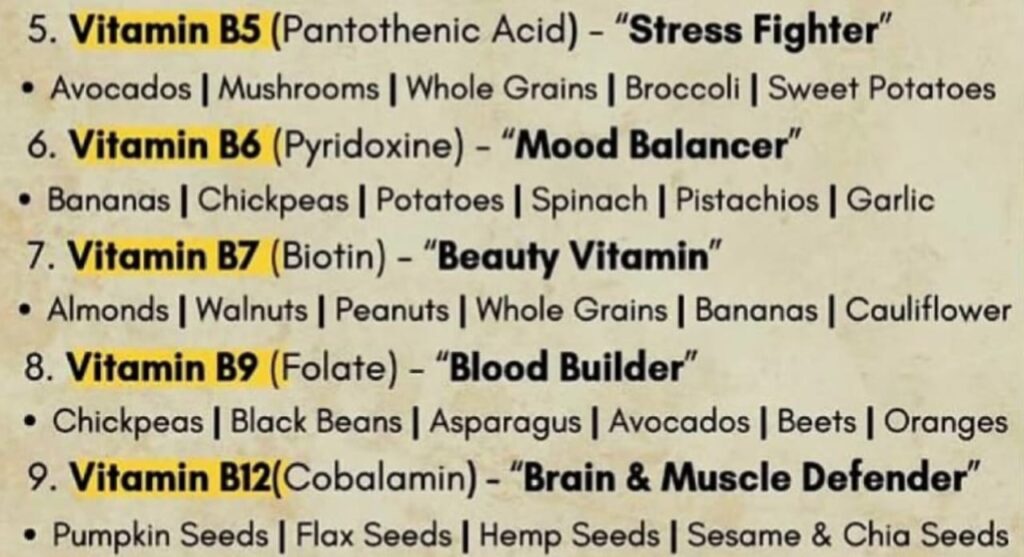
· Food Sources: Peanuts, peas, whole wheat, cauliflower, and lentils. - Vitamin B5 (Pantothenic Acid) – The “Stress Fighter”
· Role: Vital for producing stress-related hormones and breaking down fats.
· Food Sources: Avocados, mushrooms, whole grains, broccoli, and sweet potatoes. - Vitamin B6 (Pyridoxine) – The “Mood Balancer”
· Role: Involved in mood regulation and the creation of neurotransmitters like serotonin.
· Food Sources: Bananas, chickpeas, potatoes, spinach, and pistachios. - Vitamin B7 (Biotin) – The “Beauty Vitamin”
· Role: Promotes healthy hair, skin, and nails, and aids metabolism.
· Food Sources: Almonds, walnuts, peanuts, whole grains, and cauliflower. - Vitamin B9 (Folate) – The “Blood Builder”
· Role: Crucial for creating red blood cells and for fetal development during pregnancy.
· Food Sources: Chickpeas, black beans, asparagus, avocados, and oranges. - Vitamin B12 (Cobalamin) – The “Brain & Muscle Defender”
· Role: Essential for nerve function, red blood cell formation, and DNA synthesis.
· Food Sources: Note: B12 is primarily found in animal products. For a plant-based diet, look to fortified foods (like plant milks and nutritional yeast) or supplements. The listed seeds (pumpkin, flax, etc.) are not reliable sources.
The Immunity Champion
- Vitamin C (Ascorbic Acid) – The “Immunity Booster”
· Role: A potent antioxidant that boosts the immune system, promotes collagen production for healthy skin, and helps heal wounds.
· Food Sources: Strawberries, oranges, kiwi, papaya, bell peppers, and tomatoes.
How to Build a Vitamin-Rich Plate
Knowing which foods contain which vitamins is the first step. Here’s how to put it into practice:
· Eat the Rainbow: The vibrant colors in fruits and vegetables often signal specific vitamins and antioxidants. A colorful plate is a nutrient-dense plate.
· Go Whole Grain: Swap refined grains for whole grains like brown rice and whole wheat to boost your intake of B vitamins.
· Snack Smart: Keep nuts, seeds, and fresh fruit on hand for a vitamin-packed snack.
· Mix It Up: The key to covering all your bases is variety. Don’t just eat the same few foods every day.
A Final Note
While this guide provides a solid foundation for understanding vitamins,it is not a substitute for professional medical advice. If you suspect a deficiency or have specific health concerns, always consult with a healthcare provider or a registered dietitian.
By making mindful food choices, you can fuel your body with the powerful vitamins it needs to thrive.
Leave a Reply