
Coconut Oil: Benefits, Uses, and What Makes It So Unique
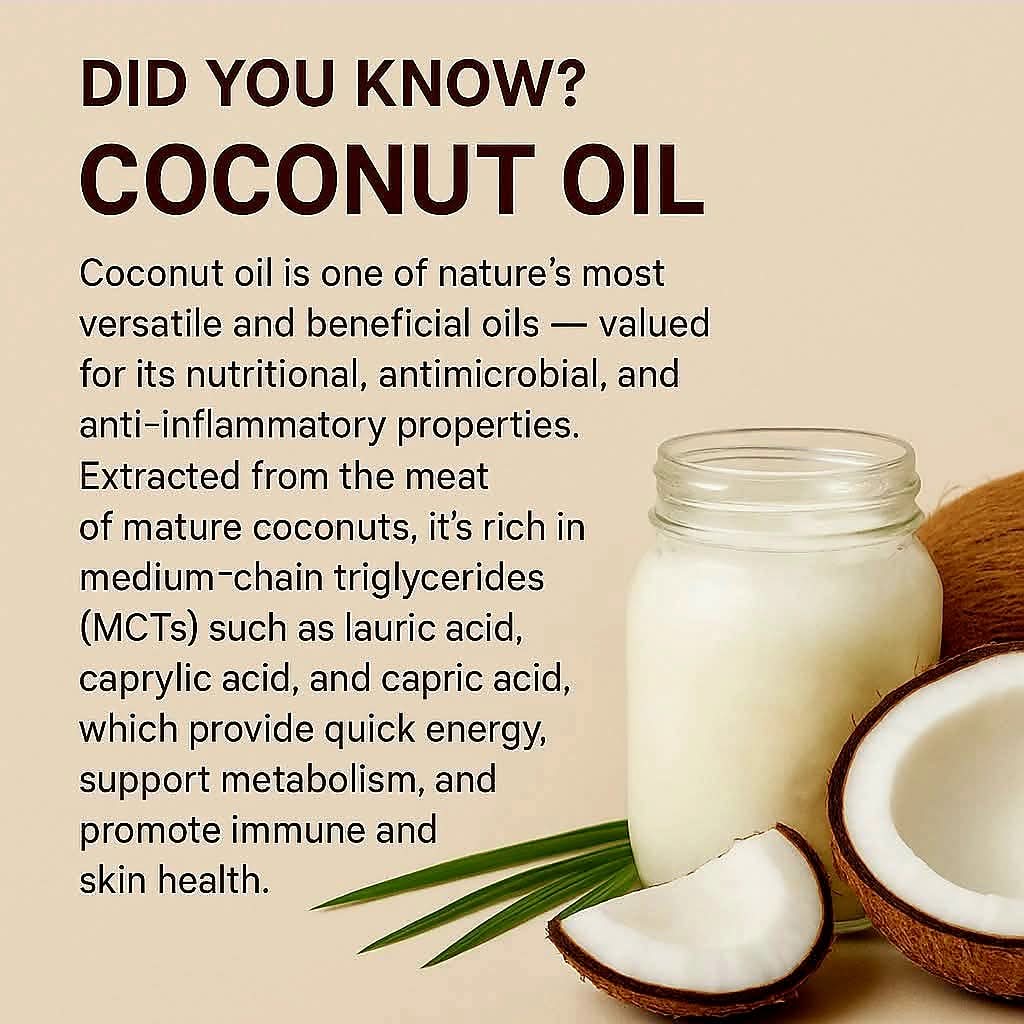
Coconut oil has become a popular natural remedy and superfood thanks to its wide range of nutritional and therapeutic properties. Extracted from the meat of mature coconuts, this versatile oil has been used for centuries in cooking, traditional medicine, skincare, and haircare. Today, modern research continues to explore its potential benefits for health and wellness.
What Makes Coconut Oil Special?
Coconut oil is rich in medium-chain triglycerides (MCTs)—a type of fat that the body absorbs and uses differently compared to most other fats. Unlike long-chain fats found in many foods, MCTs are quickly converted into energy, making coconut oil a fast fuel source for the brain and body.
The primary MCTs in coconut oil include:
Lauric acid
Caprylic acid
Capric acid
These fatty acids are responsible for many of coconut oil’s antimicrobial, metabolic, and skin-protective effects.
Key Benefits of Coconut Oil
- Nutritional Support & Quick Energy
The MCTs in coconut oil are digested rapidly and transported directly to the liver, where they can be used for immediate energy. This makes coconut oil a popular choice among athletes, people following low-carb or ketogenic diets, and anyone seeking a natural energy boost.
- Antimicrobial Properties
Lauric acid, which makes up nearly half of the fatty acids in coconut oil, has strong antimicrobial activity. It can help defend against:
Certain bacteria
Fungi (including Candida)
Some viruses
These properties are why coconut oil is sometimes used in natural oral care (like oil pulling) and topical skin applications.
- Anti-Inflammatory Effects
Coconut oil contains antioxidants that can help reduce inflammation in the body. Some research suggests it may support healthy inflammatory responses when consumed or applied to the skin.
- Metabolism & Weight Support
MCTs may help increase calorie burn and support metabolic health. While coconut oil is not a weight-loss solution on its own, it may play a supportive role in metabolism when used moderately as part of a healthy diet.
- Skin Health & Moisturization
Coconut oil is a popular natural moisturizer thanks to its high fatty-acid content. It can help:
Soothe dry or irritated skin
Support the skin’s protective barrier
Reduce mild inflammation
Provide antimicrobial protection for minor wounds or irritations
Its gentle texture and nourishing properties make it a common ingredient in lotions, balms, and natural skincare products.
Applied to the hair, coconut oil can:
Reduce protein loss in hair strands
Prevent breakage
Improve shine
Protect against damage from heat or environmental stress
It is especially beneficial for dry, curly, or damaged hair.
How to Use Coconut Oil
Cooking
Ideal for baking, sautéing, and frying
Stable at high temperatures
Adds a mild coconut flavor (especially unrefined varieties)
Topical Use
Apply as a skin moisturizer
Use as a hair mask or conditioner
Apply lightly to cuticles, lips, or dry patches
Oral Use
Add to smoothies, coffee, or meals
Use for oil pulling (swishing in the mouth for dental hygiene)
Precautions
While coconut oil is generally safe, a few considerations apply:
It is high in saturated fat, so moderation is key.
Some people may experience clogged pores when using it on the face.
Those with allergies should test a small amount on the skin first.
Coconut oil is a naturally rich source of MCTs and beneficial fatty acids that offer a wide range of potential health benefits—from supporting metabolism and energy to promoting healthy skin and hair. While not a cure-all, it can be a valuable addition to a balanced lifestyle when used wisely and in moderation.
Leave a Reply