
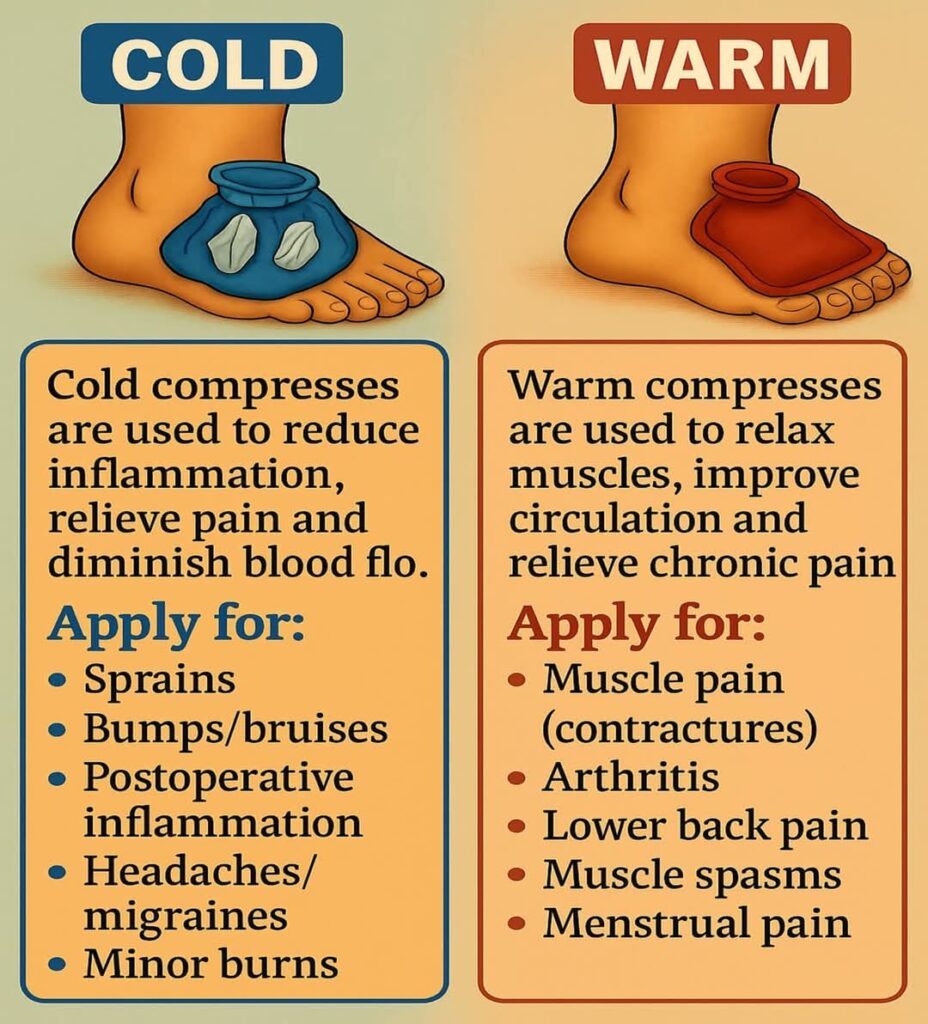
Hot vs. Cold Therapy: A Simple Guide to Which Compress to Use and When
We’ve all heard the advice: “Use ice for that!” or “Put some heat on it!” But when it comes to treating pain and injuries, using the wrong one can sometimes do more harm than good. Understanding the fundamental difference between hot and cold therapy is key to effective self-care.
This simple guide will help you choose the right compress every time.
The Golden Rule: A Quick Summary
· COLD is for Acute Injuries & Inflammation. Think of new, sudden injuries with swelling.
· WARM is for Chronic Pain & Stiffness. Think of sore, tight muscles and ongoing aches.
Cold Therapy: The Power of Numbing and Reducing
Cold compresses are your first line of defense for fresh injuries. Their primary job is to constrict blood vessels, which reduces blood flow to the area. This process effectively:
· Reduces Inflammation and Swelling
· Numbs Pain and Soothes Nerves
· Diminishes Bruising
When to Use a Cold Compress:
· Sprains and Strains: A twisted ankle or overstretched muscle needs ice to control the initial swelling.
· Bumps and Bruises: Apply cold immediately after impact to minimize the black-and-blue mark.
· Postoperative Inflammation: Following surgery, cold therapy is crucial to manage pain and reduce swelling around the incision site.
· Headaches and Migraines: A cold pack on the forehead or neck can numb the pain and help constrict dilated blood vessels that contribute to headaches.
· Minor Burns: A cool compress can help draw out the heat and soothe the pain of a minor burn (always after the skin has cooled with running water).
Tip: Always wrap a cold pack in a thin towel to protect your skin from ice burn. Apply for 15-20 minutes at a time, with breaks in between.
Warm Therapy: The Power of Soothing and Relaxing
Warm compresses are used for conditions that benefit from increased blood flow. The heat works to dilate blood vessels, which:
· Improves Circulation
· Relaxes Tight Muscles and Relieves Stiffness
· Eases Chronic Pain
When to Use a Warm Compress:
· Muscle Pain and Contractures: For that stiff neck or tight shoulders from stress or overuse, heat is your best friend. It helps loosen the knotted muscles.
· Arthritis: The deep ache of arthritis often responds well to warmth, which can ease joint stiffness and improve mobility.
· Lower Back Pain: For chronic, non-injury-related back pain, a heating pad can relax the large muscle groups and provide significant relief.
· Muscle Spasms: Heat can help calm and relax involuntary muscle contractions.
· Menstrual Pain: A warm compress or heating pad on the lower abdomen can relax the contracting muscles of the uterus, providing comfort from cramps.
Tip: Ensure the compress is warm, not hot, to avoid burns. Apply for 15-20 minutes. Moist heat (like a warm, damp towel) often penetrates deeper and is more effective.
Still Unsure? Quick Scenarios
· You just twisted your ankle (and it’s swelling up)? → COLD
· You woke up with a stiff, sore back? → WARM
· Your shoulder is sore after a tough workout yesterday? → WARM (to soothe the muscle fatigue).
· You banged your knee on the table? → COLD
· You have a tension headache from stress? → Try COLD on the forehead or WARM on the neck and shoulders to relax the muscles.
By choosing the right therapy for your specific ailment, you can manage pain more effectively and support your body’s natural healing process. Listen to your body, and when in doubt, consult a healthcare professional.
Leave a Reply